
Question-able thoughts for an Olympic season ... and maybe some answers
Our annual series of summer queries zeroes in on the Milan-Cortina Winter Games. And a few other topics occupying this author's brain

The idea in this space has always been to come up with different ways of looking at things. To provide a little context that might help you, dear reader, put things into a bit better perspective (or just one you’d never thought of previously).
In other words, it’s about finding the new. Or at least that’s the plan.
Most of the time, that involves questions. And that’s a rather roundabout way of getting to the point of today’s exercise — our annual series of summer queries about the figure skating season to come. On another scorchingly hot summer day (serious question: when do those finally end?), it’s a rather cool thought.
Being that this is Round 3 of all of this — you can find the previous editions here and here — the format should be familiar by now. Thoughts that are rolling around in this author’s head are examined in the space below, with (hopefully) some thoughtful and/or insightful answers provided.
Some of Canada’s top senior skaters have already been out and about during the summer months, honing their competitive chops. And Skate Canada’s annual high-performance camp is only about 10 days or so away. Meaning the serious business of a new season is drawing ever closer for one and all.
The big twist this season is that it includes a Winter Olympics — Feb. 6-22 in Milan-Cortina, Italy, to be precise. So naturally, a lot of the questions we have today centre around that major competition that closes out another quadrennial. Some others are just things you may be curious about as well.
As always, we’ll take a second look at all of this in three or four months time, just to see how on track these answers might be. But in the meantime, find yourself a cool spot (or drink. Or both) and have a read at the thoughts currently occupying this mind at this particular moment in time …
Is this the year Canada’s men take a big step forward?
You should already know what I think about summer competitions. They’re great for an early season look at a skater’s progress, or new things they may be working on, but my general belief is that results at this time of year are to be taken with a generous grain of salt (which has been pointed out in this space rather firmly).
However …
Something happened last weekend in the Boston area that made me rethink my world view on this a little bit. Seeing Canadians Roman Sadovsky and Stephen Gogolev claim the top two steps on the podium at Cranberry Cup was an eye raiser in itself, given such results at international competitions (this was the season-opening Challenger Series event) by men’s skaters from this country have been in short supply in recent seasons (at least as the senior level).
But it went a little further than that. We drilled down a bit on some scores last week (a late addition to the bottom of this column if you missed it) and found some rather interesting things. In taking the gold medal at Cranberry, reigning national champion Roman Sadovsky produced a free skate score (his new program is skated to Cody Fry’s “Photograph/Clair de Lune”) that was more than eight points higher than at 2025 Worlds in Boston (that 168.47 number at Cranberry was also the second highest of his career).
Consider that at this time a year ago, Sadovsky was scoring 144.20 for the long at the same event. His overall total of 224.70 then was nearly 20 points shy of his overall number this year (243.23, also higher than Boston Worlds). It’s the kind of thing that suggests that the 26-year-old Sadovsky might be primed for even bigger things in the months ahead.
Heady stuff heading into an Olympic season, we’d say.
There are bigger steps yet to be made in the short program, mind you (“Cold,” by Chris Stapleton, a revival of a 2022-23 routine, is the music choice there) in terms of boosting his score (74.76 at Cranberry Cup). But still, Sadovsky and his team had to like last weekend as a starting point for this most important season.
Gogolev rising from 11th after the short program to the silver medal position was another encouraging sign. So was seeing him skate a long program filled with three quads and six triples (two of them Axels). That’s the kind of talent that has been there going all the way back to his junior days.
Health, as we’ve mentioned plenty of times previously, is always going to be a question with him. But peak form Gogolev, or anything close to it, can challenge for a Canadian title in January in Gatineau, Que. And perhaps even be a factor internationally through the season.
The good news generally is we’re talking about positive things when it comes to Canada’s men, even before the season truly gets started. Safe to say, it’s been awhile since that’s been a conversation. And maybe, just maybe, it’s a sign that those better days ahead are closer than we may think.
Is the women’s Olympic berth Maddie Schizas’ to lose?
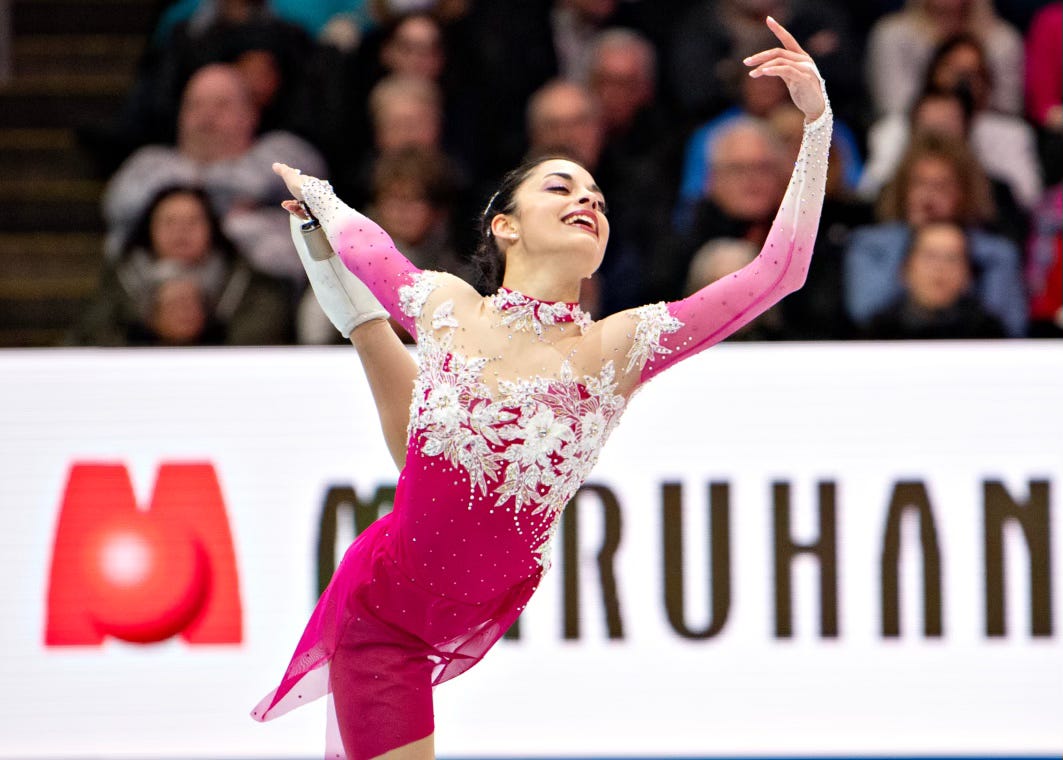
Yeah, I sound like a bit of a broken record about this one. But this particular thought is going to get repeated one more time here — at her best, Maddie Schizas is the best women’s skater in Canada. And at her best, the lone Canadian women’s ticket to Milan should be hers.
There was plenty of evidence to back up that thought last season … and we’re not just talking about the almost top-10 finish she earned at 2025 Worlds in Boston (she fell one agonizing spot short in 11th). There was also her rather dominant triumph at Canadian nationals in Laval, Que. And some pretty high-level performances at Skate Canada International earlier in the season in Halifax.
Despite all that, search around enough among Canadian skating fandom and you’ll sense a whole lot of intrigue about what might happen in January in Gatineau. As in, maybe we might have a real dogfight on our hands at the Slush Puppie Centre (which this observer, for one, would consider the highlight of 2026 Canadians if it does indeed happen).
Some of this, no doubt, comes from the knowledge that women’s skating in Canada has suddenly gotten a whole lot more competitive. We saw two new faces on the senior women’s podium in Laval (Sara-Maude Dupuis and Katherine Medland Spence). Kaiya Ruiter is still very much in this picture. And there’s been a real summertime buzz about Gabrielle Daleman and her quest to become the first Canadian to compete in the women’s event at three Winter Olympics.
(interestingly, two-time Canadian champion Daleman — who essentially missed the previous two seasons because of injuries — posted a 61.71 score for the short program on Friday, which put her in front of Ruiter’s 55.53 and the 54.23 produced by another rising contender, Breken Brezden, at a Skate Ontario Series event at RIM Park in Waterloo. Now, it is a summer competition after all … but still).
Now, to get back to the original question … having said all of the above, the belief here is that premise is still correct for the most part. Not to say that somebody can’t rise up and have the skate of their lives in Gatineau, but our faith here in Schizas isn’t about to waver. At least not for now (but as previous history in this space shows, we do reserve the right to revisit this after the Grand Prix season).
Will Canada return to the Olympic podium in Milan?
The reality is, this is probably THE question for Canadian skaters this season and maybe should have been in front of the previous two. But we didn’t want to pass up on the opportunity to give Canada’s men some love … and we already took an early run at this particular question back at the end of May.
But rather than take the easy route with a quick cut and paste of what we said back then, let’s conjure up some new words for this particular space, shall we?
Here’s the gist of the situation. Canadian skaters went home empty handed from the Beijing Games in 2022, four years after a record four-medal Olympic haul for this country in PyeongChang. Now, we can grouse a little bit here about what ended up happening in the Team Event, where weird-ass International Skating Union math denied Canada a bronze medal. But we’ve litigated that enough in this space, so let’s move on.
Point being, the last time Canada’s skaters didn’t see the podium at a Winter Olympics was way back in 1980 in Lake Placid. That’s a whole 42 years, if you don’t want to do that particular match. And the number will stretch to 46 if the blank space happens again in Milan.
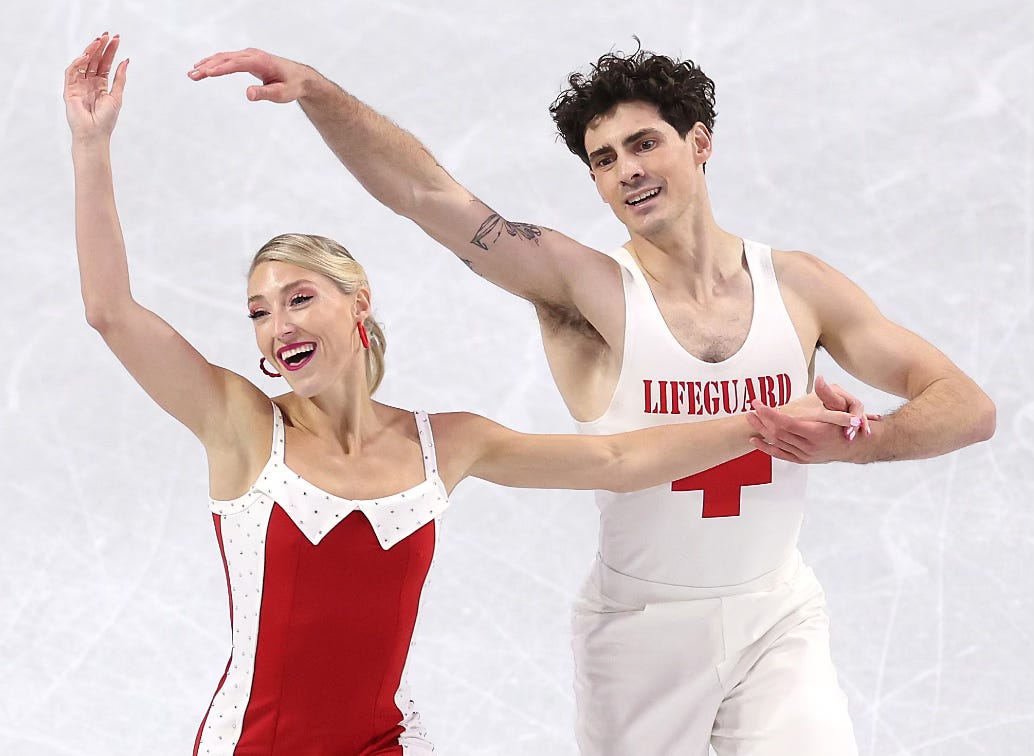
There are pretty good odds that won’t be happening, however. That’s simply because we like where Canadian ice dancers Piper Gilles and Paul Poirier sit heading into what will be their third (and most probably final) Winter Games. The thirty-something duo has landed in the silver medal position at the last two World Championships and have clearly established themselves as, at the very least, the second-best ice dance duo on the planet (behind Americans Madison Chock and Evan Bates, who are now three-time World champions).
While ice dance can sometimes be the most volatile of discipline in terms of results — at least on a year to year basis (we’ll have more on that in a bit) — Gilles and Poirier are skating better than ever. Yeah, there were glitches last season at the Grand Prix event in Finland and the Series final. But when the calendar turned to 2025, they were locked in and back at the top of their games.
Expect to see more of that from these two in what may well be their farewell season (although we’ve said that a few times before, so who really knows, right?).
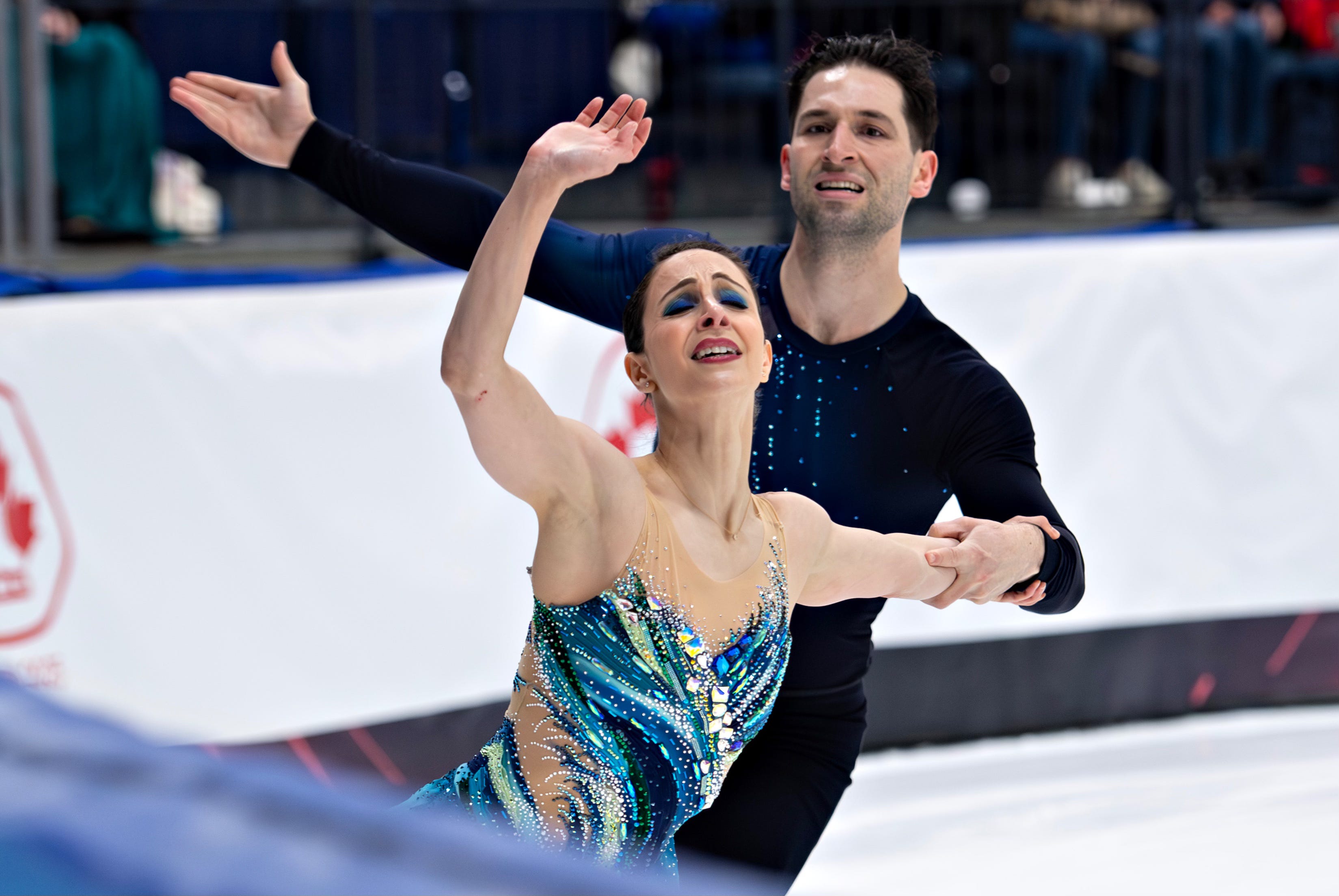
I’m guessing there may be a few eye rolls out there when I put the names of Deanna Stellato-Dudek and Maxime Deschamps in the response to the above question as potential Olympic medallists. And perhaps you’d be entitled to think so, given that the Canadian duo went from World champions in 2024 to fifth place in Boston (they’d also placed fourth back in 2023 at Worlds in Japan).
Sure, there are going to be skeptics. But not in this space, simply because the author knows better than to doubt the ageless Stellato-Dudek, who’s now 42. All that result in Boston did was reignite the hunger for these two, who thrive when they’re placed in the hunter position (the gold in Montreal being the ultimate proof of that).
Perhaps a reminder of what another World champion pair from Canada went through the season before the Olympics might fit in well here. We delved into this in early July, but you might recall Meagan Duhamel and Eric Radford went from back-to-back gold medals to seventh at 2017 Worlds in Helsinki (for a variety of reasons). Then a year later, they showed up in PyeongChang and willed their way to an Olympic bronze medal in the pairs event.
So in other words, there’s some precedent here for Stellato-Dudek and Deschamps to rebound in a similar way in Milan (and if anyone out there is a true Deanna believer, it’s Duhamel). It was a tremendous story (one of the best I’ve ever reported on, if we’re being honest) when they won Worlds in 2024. It might be an even better one if this Canadian duo lives their dream and winds up on an Olympic podium.
Will we see any real drama in the pairs event at nationals?
Depends on what kind of drama you’re hoping to see. If you’re talking about a potential battle for a national crown … well, it was a bit of a close call back in January at Place Bell, if you recall.
Stellato-Dudek and Deschamps did make it three Canadian titles in a row, but their margin of victory was razor thin — 2.10 points over Lia Pereira and Trennt Michaud, who actually won the long program (admittedly, it was far from the champions’ best effort). But the point is, Pereira and Michaud did make it interesting and it’s something they suggested in last week’s column, that they want to continue pushing their Canadian rivals.
So if that’s the kind of drama you’re looking for, maybe we see it again.
But we’re hitting on a different topic here, one we first addressed way back in March, in the wake of Worlds in Boston. And that’s the fact that the results produced by the two above-mentioned teams weren’t good enough for Canada to retain three pair spots for Milan (and for 2026 Worlds in Prague).
It had to be bittersweet for teams such as Kelly Ann Laurin and Loucas Ethier, who have two straight Worlds appearance under their belts — but were nearly 18 points back of peak Pereira and Michaud in Laval. The bottom line here is that as it currently stands, the top two pairs teams are a cut above the rest in Canada.
Yeah, a lot can change between now and 2026 nationals, and that has to be the hope for the teams below the top two. And you know they’ll be working hard to make that happen, with that hope in their hearts. But failing that, we pretty much know which pair teams are going to Milan. And there’s not exactly any real drama in that.
Can Majorie Lajoie and Zachary Lagha get themselves back on an upward trajectory?
It’s a thought we’ve had for a long time when it comes to ice dance and, for the most part, it tends to be true. Once you start going in the wrong direction in terms of results (as in, downward), it’s awfully hard to turn things around and head back up the ladder. Not that it’s never happened, but it seems to be a generally rare thing.
What to do, then, about Marjoie Lajoie and Zachary Lagha, the still quite young (in ice dance terms) and mostly ascendant Canadian couple, who went from a top five finish at 2024 Montreal Worlds to a seventh-place standing (by a scant 0.51 points) back in March in Boston. Yup, that’s heading in that bad direction, but …
No doubt Lajoie and Lagha’s team has done plenty of soul-searching about what went wrong at the tail end of last season — in particular, why international judges suddenly went sour on their free dance in the final two events of the season (Four Continents and Worlds). That seemed to be the biggest factor in their slippage in the standings back in March at TD Garden.
But here’s the sunnier way of looking at this. Like we’ve already mentioned, Lajoie and Lagha are still relatively young of age by ice dance standards (they’re 24 and 26, respectively). There is still tons of growth to be done, tons of time to bring out even better than we’ve seen out of them already (and there has been lots to like).
It’s why the answer to this question has to be a resounding yes in this observer’s mind. We’re on record here in saying that a World title is something that very much could happen for these Canadians in the next quadrennial. And we’re nowhere near backing off on that projection. Not one single bit.