
'Everything is in my control'
After a frustrating season that literally spun away from her by the end, Canada's Katherine Medland Spence looks forward to calmer waters ahead

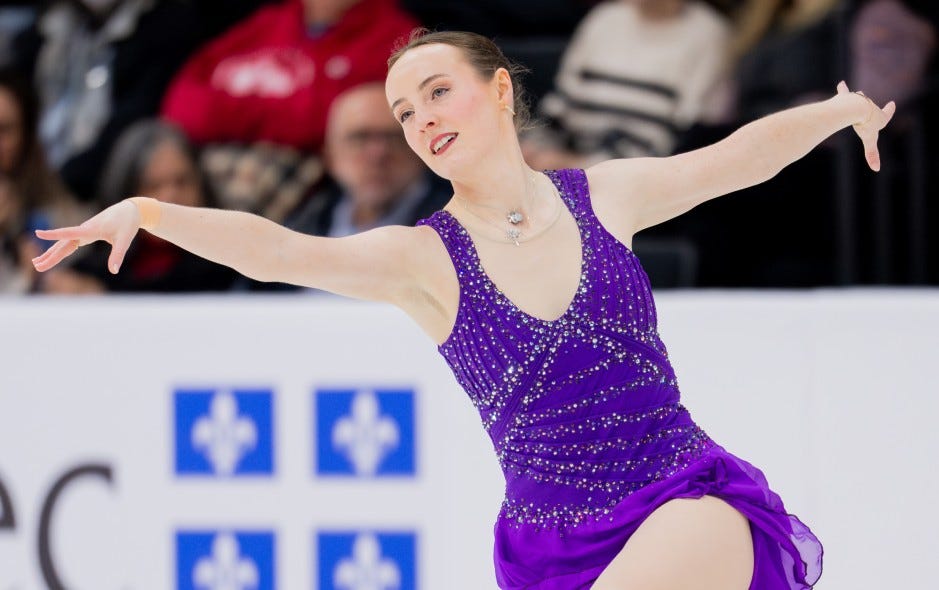
You know that old saying about life spinning out of control? Katherine Medland Spence literally lived it for much of last season, until the very moment she was forced to call an early end to her campaign.
The good news is, the 25-year-old figure skater from Ottawa is finally starting to see the proverbial light at the end of a very dark tunnel, and that has her optimistic that a return to competition in the fall will come with some brighter days ahead. Life owes her that at this point.
When we chatted recently, Medland Spence was sounding that note of optimism, even it still comes with a touch of caution. Vertigo, the affliction that literally can leave a person struggling for balance, has that kind of dizzying effect on your life. Literally and figuratively.
“It’s getting better; the vertigo is getting better. The recovery is going well,” she said over the phone from Toronto, where she works under the direction of coaches Ken and Danielle Rose at the Richmond Training Centre. “Physically, I’m getting a lot stronger.
“I’ve been in the gym a lot, so any of those kind of lingering, nagging things are resolving, and I’m just not hurting anymore. But now I have a lot more strength, which is really great.”
Yes, this is going to be one of those stories — a whole lot more happened to Medland Spence last season, which we’ll get to — but let’s start with how things finished. The last time we saw her in competition was at the Canadian national championships in Gatineau, Que., which happens to be right across the river from her hometown of Ottawa (she still represents the Nepean Skating Club).
And it wasn’t exactly a happy ending. After gritting her way through the short program at Centre Slush Puppie, Medland Spence endured a disorienting practice on the day of the free skate. One that left her with no choice but to call an early end to her fifth nationals and season.
“It was definitely hard. I knew on the practice of long program day, it did not go well,” she said in recalling the decision to pull the chute at Canadians. “I was feeling okay, but when I got on the ice, things just were off. I knew stuff was off, and it was beginning to become unsafe. I left the practice early because of that. I was also heaving.
“That’s how poorly I was feeling, so I knew I had to get off the ice. And then I went to physio, and I sat there and had a long episode of vertigo, and that was when I had the discussion with my coaches. I said I think I might have to pull (out), and they were in agreement. They were already on the page of, if I wasn’t going to be coming to that decision myself, they were going to be having that conversation.
“So yes, I’m grateful for them, the fact that they were looking out for my safety, beyond just me wanting to complete nationals, because me going out there and doing the long program would not have been safe … if I had gone out there, it would not have been something I would have been proud of, or even safe to do.”
Understand that this was the first time that Medland Spence would get to compete at nationals essentially at home in front of family and friends (her Canadians debut back in 2022 in Ottawa was during COVID-19 pandemic times, meaning she competed in an empty building with no spectators). So yeah, the withdrawal was bittersweet, though she knew it was absolutely the correct decision for her health.
Even if it took her a few days to come to terms with that fact that she had taken control of a situation that felt like anything but that.
“It was frustrating, but at the same time my season ended with me having full control of how it ended, and I think that was something I really took out of it,” she said. “It took a few days to realize that, but that was kind of the discussion (we had) going into nationals with dealing with everything from the whole season.
“The season felt very much not in my control, and I was at the mercy of time … in the end, I did end it on my own terms. It was frustrating and disappointing, the fact that I wasn’t able to go out and show the work that I was so proud to have done since Japan (NHK Trophy), despite everything that was going on.”
The real marvel is that Medland Spence was somehow able to get through a short program in Gatineau (the mere thought of trying three-revolution jumps and spins while dealing with vertigo would give me the absolute shivers). But she did earn positive GOE (Grade of Execution) on all but one of her elements in producing a 56.98 score, about five points less than a year earlier at 2025 nationals in Laval, Que. (when, it must be said, she was much, much healthier).
“Adrenaline,” Medland Spence said when asked how she got through it. “Basically, I think I had done maybe one full short program with spins in (the run-through) before nationals, because I’d been training it without spins or with partial spins, because it just wasn’t realistic for me to continue training through a week with doing all my spins.
“I think it was just the grit I had to be like, ‘no, I’m going out there and I’m doing this, and nothing is going stop me.’ So I would say adrenaline and Gravol was what got me through it.”
As we alluded to earlier, it’s a season that had many more downs than ups — certainly not what Medland Spence had planned for in the wake of her breakout 2024-25 season, in which she won a gold medal in her international debut at Warsaw Cup (a Challenger Series event) and placed third at Canadians, her first medal at that major competition.
Some of things she dealt with were nagging injuries that took time to work through, along with one particularly scary issue that, thankfully, appears to be fully in her past right now. Somehow, she kept plugging away through all of the obstacles, until she finally couldn’t in the last competition of a truly rough campaign.
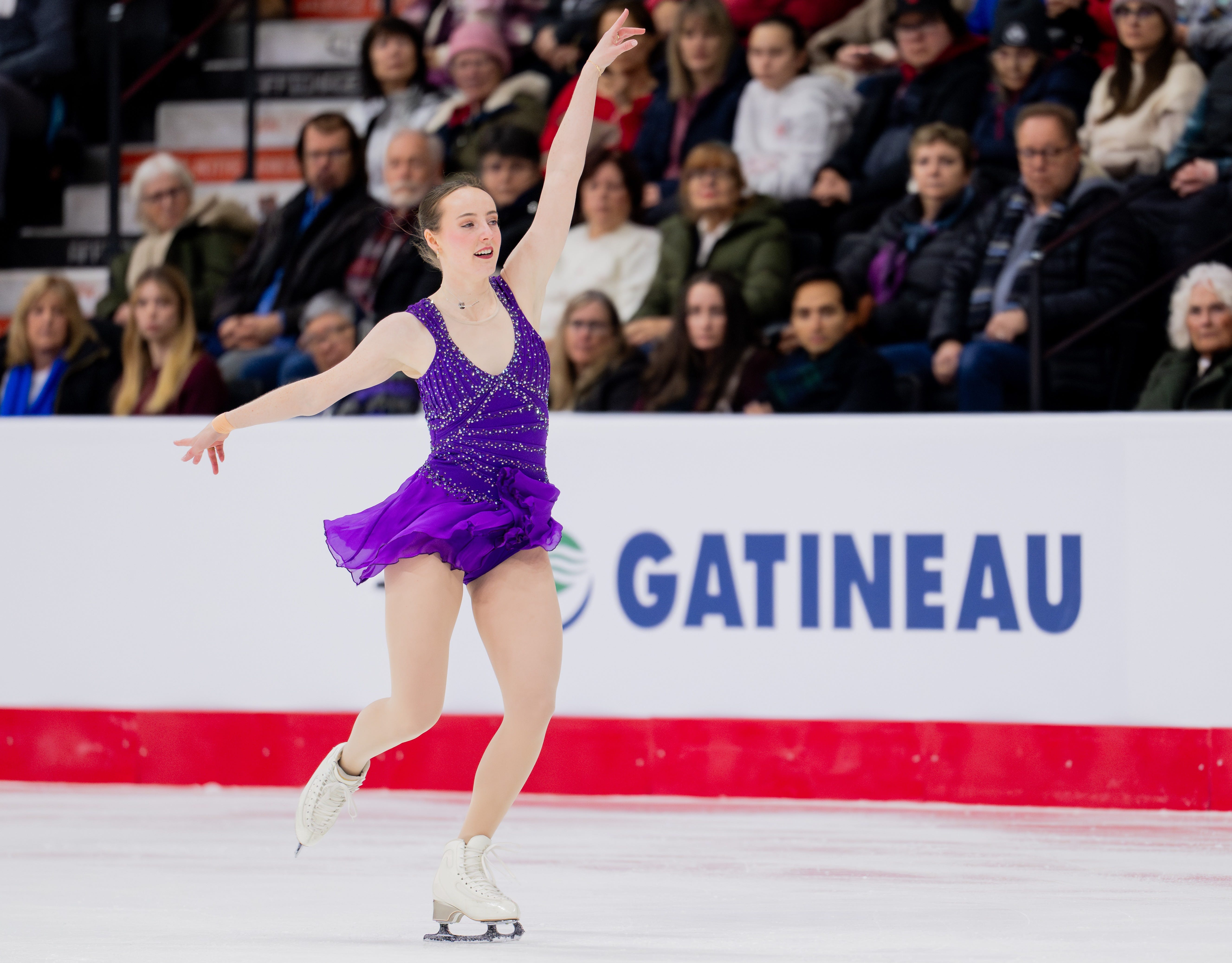
“When I think about last season, it was very much the season that could have been. I had all these opportunities because of the season before that, because of my results of that (2024-25) season,” she said. “I was so excited to get a Grand Prix and I knew I was going to get a Challenger (Nebelhorn Trophy, as it turned out). I had all these opportunities that I was like, (that’s) awesome.
“Then it just felt like everything was … not slipping away but trying to be ripped out of my hands, and I just essentially was like ‘no, I’m going to make this happen.’ We did have many discussions as a team, about what is the smartest thing to do, is the smartest thing to pull (out), not go to these competitions?
“But I think our general consensus was that in skating, you don’t know when you’re going to get another opportunity, and I was at the point that I had enough training behind me that I could go out there and do something and get something useful out of the competition. That’s why we kept going, and I wanted to. That was the big thing, that I wanted to do it, so my team was going to support me in making that happen.”
That scary moment we referred to? That happened in July, when Medland Spence noticed a lump in one of her breasts, which led to her undergoing a lumpectomy near the end of August. Fortunately, the growth was non-cancerous, and she has had follow-up appointments since then that have shown she remains clear.
“It started in July. Early summer was when we got a biopsy done, the appointments and everything, and then we were waiting for a surgery date at the same time as the Cranberry Cup registration was happening,” she said. “So we decided to (withdraw) from that, given that we didn’t have a surgery date.
“I didn’t want to start revving up, and then it turns out I have surgery the day before I’m supposed to leave, so we decided to just postpone that. It gave my body time anyways, because I was still dealing with all of my knee and hip injuries and everything, so it just gave me time to get better in that aspect as well.”
So much was going on, in fact, that Medland Spence didn’t fully grasp the severity of what she was dealing with right away. But eventually, she came to realize exactly how scary all of that was — and how fortunate she is now to be one of the healthy ones.
“The funniest thing about this is that in the moment, for me it was so, not out of the blue, but it was so hard for me to conceptualize it,” she said. “I didn’t really realize the full impact of it until I spoke about it at nationals and someone wrote something about me having a breast cancer scare, and I was like, that’s a very dramatic way to put that.
“Then I spoke to my coaches about this. It’s weird … they kind of looked at me, and I was like, ‘Oh my God, that’s totally what happened.’ But I think just among everything that was going on, the injuries, everything … my brain didn’t have time to fully process it, which I think in the end has been good, because I wasn’t able to doomsday it too much. But yeah, looking back on it, definitely frightening, and I think more frightening for the people around me than it was necessarily for myself.”
It wasn’t long after the surgery that Medland Spence needed to prepare herself for Nebelhorn (she placed 10th in that event in Oberstdorf, Germany), and the resiliency she showed in just getting to that competition — and what it took to just feel well-trained — was among the more positive things she took out of what was a mostly lost season.
“For me, what we really discovered in training was that I know how to trust my training, and even if I don’t have a ton of training behind me, I’m able to go out there at an event and trust myself to do it,” she said. “Especially Germany was our big one, because for Germany, I had three weeks of training going into that, and one of those weeks I wasn’t back to full training yet, because I was still recovering from surgery.
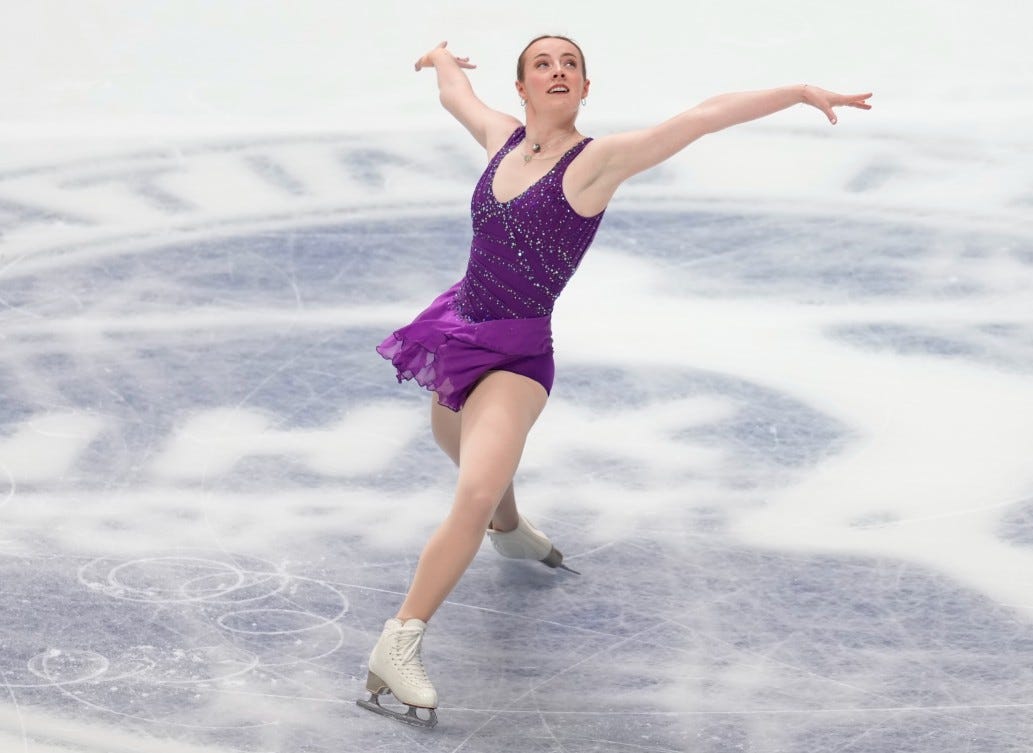
“So it was a very tight timeline, and we didn’t know at that point if I was going to be competing. I was going to do my very best, but there was a possibility I just wasn’t going to get ready in time, and I think again I was like, ‘no, that’s not happening. I’m getting ready in time through hell or high water.’
“I am going there, and I’m going to put out performances that I am going to be happy with. And so that was a good mindset reminder of just going out there and trusting myself. I’ve done this a lot, and so, no, I didn’t have a ton of training behind me, but the training I did was good, and I knew I could trust that.”
There was a bigger test — and more wonderful opportunity — to come in early November, at NHK Trophy in Osaka, Japan. Medland Spence competed at Ontario Sectionals in mid-October, and it was in the days just before she left for Japan that the first signs of vertigo began to creep into play.
“At that point, we weren’t entirely sure what was going on. We had identified just before we left that it was vertigo,” she said. “I happened to hear someone talking about what vertigo was like for them and what they experienced, and I was like, ‘Hmm, that’s what I’m experiencing.’
“So we talked with the people at CSIO (Canadian Sport Institute Ontario, a sport science organization) before we left, just to give them a heads up, to be like, ‘Hey, we’ve noticed this, when we get back, we’re going to want to look into this.’ So, while I was there, it wasn’t hugely impactful … I just was able to give it a name.”
Medland Spence still displays a sense of wonder about her experience in Osaka. While she finished 11th in the field of 12, it’s hardly the thing she carries with her when recalling everything that happened in her very first Grand Prix appearance.
“It was incredible. It was amazing. I remember walking into the building (Towa Pharmaceutical RACTAB Dome) and just being in shock at the sheer size of it,” she said. “It was bizarre competing on a pool (the building transforms for seasonal use) and looking up and seeing the diving platforms, and there was a cameraman harnessed in on the 10-metre platform I don’t even have words to describe that.
“It was interesting, nothing like I’ve ever seen before, but the crowd there was incredible. I’ve never experienced so much adrenaline at a competition I’ve ever been at. I remember starting both programs with my legs just shaking, just because of the crowd, but I was really, really proud of how I handled that. (Japan) is known for their big crowds and supportive crowds, and it lived up to that.
“So it was a great experience, and great to just check something off a list, not even a bucket list, because that wasn’t something I never envisioned myself doing, but it was a great thing to just check off, to be like, okay, I’ve done that. I had performances, not that were perfect, but that I was proud of, especially given everything over last year.”
The other highlight was the chance to see Japanese star Kaori Sakamoto compete at her last NHK in front of an adoring home crowd. It was one glorious step along the way to what would be a spectacular (and golden) farewell performance at 2026 Worlds in Prague.
“I had a practice with her one day, and at one point, Danielle and I were just like, we just need to stand here and watch,” said Medland Spence. “Knowing that she was going to retire, I knew that I was never going to get the chance to ever skate with her again, and the fact that I could watch her in her home country compete and have such incredible skates, it was amazing.”
From that point on, the vertigo continued to get worse as Medland Spence began to gear up for nationals, which ended in the abrupt fashion that it did. The effects carried on for some time after that competition, with Medland Spence unable to do any triple jumps for nearly two months.
“After nationals, I started my vestibular therapy. The whole plan last season was as long as my symptoms were manageable, I would keep going,” she said. “But when it got to the point that my symptoms were no longer manageable, I would have to start the vestibular therapy. With nationals ending the way it did, that was the defining time.
“So, when you start vestibular therapy — I was warned about this — but it pretty much takes you down to zero, and you have to really work your way back up. Before nationals, I was able to do a lot and do triples and do spins and push myself really far. Once you start the process of that rehab, you’re back down to zero, and it’s just working your way back up.”
That vestibular training, which involves eye tracking therapy, began on the Wednesday after nationals ended. And it ground her training to complete halt in certain areas.
“It’s very similar to concussion recovery with a lot of eye tracking, but essentially skating was too much for me with these exercises. So I took a decent amount of time off skating, and then I would slowly build up that,” she said. “I could go in and skate a little bit, but even skating would be too much.
“I had to start with small amounts here and there when I was feeling good, and then it slowly just built up more and more as I’ve built up my vestibular system. Then I’m able to do more things on the ice.”
It was in March that Medland Spence was able to start doing all of her triple jumps again, and she called that “very satisfying and a good checkpoint to have reached at that point.” While the vestibular training remains a daily thing, she and her coaches have been able to increase the volume of her training with each passing week.
“There are (vestibular) exercises I do every day to just slowly keep increasing my baseline,” she said. “For the regular person, I’m kind of at where I need to be, but because of the demands of the sport, I need it significantly higher. So, yeah, so I still do it.
“I go regularly for appointments to just check in and see how my progress is going, and then we tailor the exercises toward that.”
To this day, Medland Spence and her team have yet to figure out exactly why or how all of this started, although she does understand that she might have been someone who was just vulnerable to it.
“Apparently, the type I have can just occur randomly. I do know that I’ve always had a fairly high baseline of motion sickness,” she said. “I’ve always been one that, since I was young … I’ve never been on roller coasters, because I get motion sickness, so it’s understandable how it happened, because I had a higher baseline anyways, but we don’t really know what pushed me over the edge into actually experiencing vertigo.”
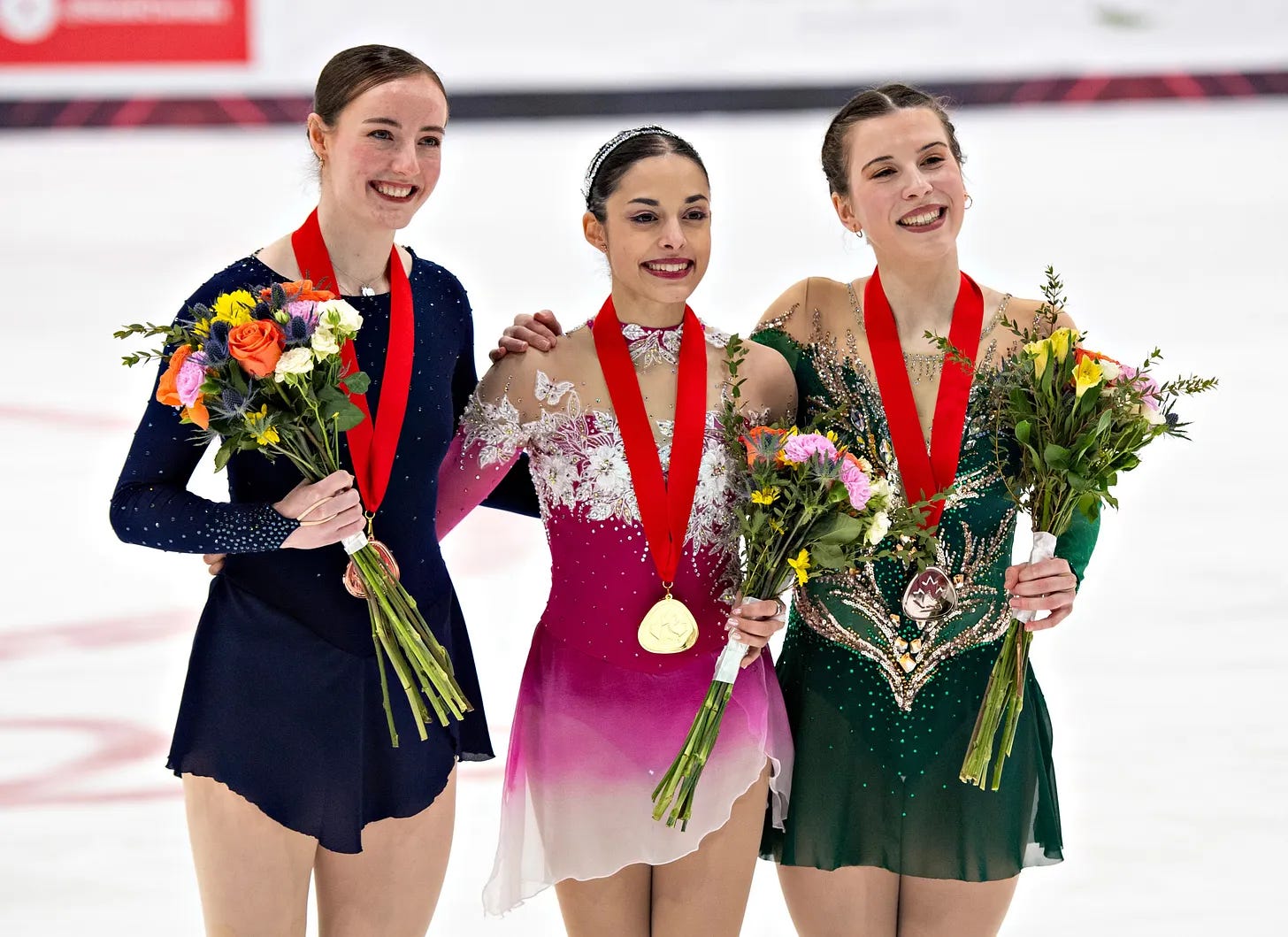
The good news is, things have progressed in a positive way to the point that plans are underway for a new season. Medland Spence and Danielle Rose, also her choreographer, have completed a new long program that will be skated to Sienna Spiro’s “Die On This Hill.” It’s music that feels just right to her for this moment in time.
“This was a piece of music I heard, and I asked Danielle, what is the meaning of the song? Because I was lost as to what the meaning was,” she said. “I just enjoyed the voice and the feeling of the music, but what I’ve taken from it is that it’s kind of a triumphant, powerful song.
“Danielle had played it on the ice at one point, and I heard it, and then I heard it a few more times throughout the next month, and I kept coming back to it. I felt, I really like this, and I got to the point that I was like, okay, Danielle, I think I want to skate to this, and she went, I think it would be great for you.”
(her short program music had yet to be finalized when we chatted).
Given all the general uncertainty of the last season, Medland Spence’s goals for the coming season involve simply enjoying her time on the ice — and feeling as under control as she can be.
“Honestly, I just want to go out there and enjoy it, especially this long program. I really, really like it, and I connect with it, and that’s not something I do a lot with music,” said Medland Spence, who likely won’t compete until the fall. “So I’m excited to go out there and skate that, and really just kind of take off any timeline pressure that I have.
“Last year was very much … I felt like time forced a lot of my decisions, and I kind of vowed to myself that I wasn’t going to let that happen again. And everything is in my control; even when things feel out of control, I can decide how I want to proceed. So yeah, very much I want to go out there and train in a way that I’m happy with, and that works for me.
“That might look a little different than previous years, just still with the vertigo recovery, but I’m excited to continue progressing the way I have been and getting back into full training.”
The lost season has also given her a feeling of unfinished business and, with the soul of an explorer, she wants to delve into many more new things before her run on the ice is done. She also has four courses left to finish her biochemistry degree at Carleton University in Ottawa, and that’s something that will get done eventually.
“There are things I still want to work on, and things I still want to do, and the more I skate, the more my eyes open up to different, not opportunities, but different things that I want to work on and want to do,” she said. “So yeah, I just want to keep exploring as long as my body’s good, and vestibularly I’m good. I plan to just keep going.”
She’s very brave to cope with vertigo. I wish her well.